
 Vietnam
 Thailand


Premier League Managers Ranked Ahead of the New Season: Arteta Takes No.1 Spot
British media have ranked all 20 Premier League managers ahead of the new season, with Mikel Arteta taking the top spot.
Who is the best manager in the Premier League? Over the past decade, that has barely even been a meaningful debate — any answer other than Pep Guardiola would have been wrong.
Twenty trophies speak for themselves, as does the way he transformed English football.
Now that Guardiola has left, the English media can finally ask the question again. While recent performances inevitably influence opinions, this ranking attempts to take a broader view rather than focusing solely on this season.
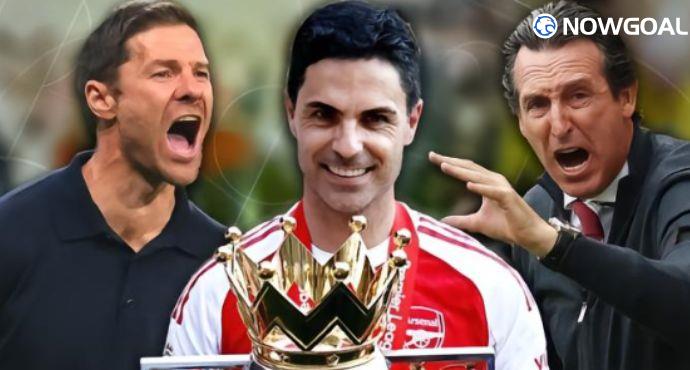
20. Sergej Jakirović (Hull City)
I was at Wembley on Saturday. The sun was shining, and Hull City completed one of the stories of the season by winning the promotion play-off final. It was a wonderful day.
Hull have a very likeable squad and an outstanding fanbase. Many people expected them to battle relegation, but the Bosnian manager guided them to promotion to the Premier League — ironically failing in his only “objective,” which was keeping them in the Championship.
So why is Jakirović bottom of the list? Simply because he still has a lot to prove. He silenced many doubters this season, but now the real challenge begins.
19. Vítor Pereira (Nottingham Forest)
Vítor Pereira is something of a “firefighter” manager. He did an excellent job keeping Wolves up last season, then stabilised Nottingham Forest and led them to the Europa League semi-finals.
Still, this may be controversial, but it feels as though Forest and Pereira have already reached their ceiling together. He became the club’s fourth manager in a chaotic season. You can almost picture it already: another managerial change at the City Ground by the October international break.
With players like Elliott Anderson, Morgan Gibbs-White and Murillo, Forest should still aim for a top-half finish, even if one of them leaves. But under Pereira, that ambition feels difficult to imagine.
Bournemouth surprised many by replacing Gary O’Neil with Andoni Iraola after surviving relegation in 2023, but the move proved inspired, taking the club to a new level. Forest should consider doing the same.
18. Frank Lampard (Coventry City)
Frank Lampard is one of the most personable figures in football. His managerial spells at Derby County, Chelsea and Everton may have been underrated, especially considering the off-field problems surrounding those clubs at the time.
I watched Coventry several times this season and they were always entertaining. Back in the top flight for the first time in 25 years, they will be a welcome addition to the Premier League next season, as will their passionate supporters.
Honestly, placing Lampard here may be slightly harsh — but I’m happy to be proven wrong.
17. Daniel Farke (Leeds United)
The 2-3 defeat away to Manchester City during the winter keeps getting mentioned whenever Daniel Farke comes up, but the transformation since then has been remarkable.
Many expected Leeds to go down, much like Farke’s Norwich teams before them. But after switching to a back three at half-time in that game at the Etihad, he comfortably guided Leeds to safety.
With reasonable backing, I believe Farke can establish Leeds as a mid-table side. But they will still begin next season under relegation pressure.
16. Keith Andrews (Brentford)
Last summer, how many people genuinely tipped Brentford for relegation? Probably quite a few.
After losing the best manager in their history, Thomas Frank, many assumed Brentford’s good times were over. On top of that, Bryan Mbeumo, Yoane Wissa and captain Christian Nørgaard all departed.
Stepping in was rookie manager Keith Andrews, promoted from set-piece coach. Yet he has done an outstanding job. Had Dango Ouattara not missed a huge stoppage-time chance at Anfield on Sunday, Brentford would have secured European football.
If Andrews can replicate this excellent first season next year, he will rank much higher.
15. Kieran McKenna (Ipswich Town)
Kieran McKenna inherited an Ipswich side that had spent more than a decade drifting in League One after years of failure. Now he has guided them to the Premier League twice.
There is a reason why Manchester United and Chelsea have closely monitored him — he is one of the brightest young coaches in football.
One relegation was acceptable because Ipswich were widely expected to go down. This time, however, supporters will expect more. Now it is time for him to prove himself at the highest level.
14. Marco Silva (Fulham)
Some of my Fulham-supporting friends say they are beginning to tire of Marco Silva because the club finished 10th, 13th, 11th and 11th again. But they should be careful what they wish for.
If Silva leaves — perhaps even this summer — Fulham could easily get worse.
He plays attacking football and works impressively within limited budgets. People forget that before he stabilised the club, Fulham were constantly bouncing between the Premier League and the Championship.
13. Michael Carrick (Manchester United)
Michael Carrick has done an exceptional job at Old Trafford. In truth, he has outperformed many managers with decades more experience.
He has restored attractive football to Manchester United and given supporters something to be proud of again. After the chaos left behind by Alessandro Amorim, guiding United into the Champions League places with games to spare was remarkable.
The former United midfielder has also revived Bruno Fernandes and improved struggling players such as Benjamin Šeško.
When I first drafted this list, Carrick was near the bottom. But as I wrote, I moved him significantly higher. I also loved the football his Middlesbrough side played. Now it is time for the remaining doubters to be silenced.
12. Fabian Hürzeler (Brighton)
Fabian Hürzeler is still only 33 years old, yet he has already led Brighton to qualification for next season’s Europa Conference League — only the second European campaign in the club’s 125-year history.
He is not Roberto De Zerbi, and Brighton’s football is not quite as beautiful, though it remains entertaining. Fans have gradually warmed to him.
What stops him ranking higher is inconsistency. Brighton can look brilliant at times, but those purple patches are often followed by long winless runs. He must solve that issue.
11. Régis Le Bris (Sunderland)
I have to admit, I doubted Sunderland all season long.
When they were promoted, I predicted immediate relegation. When they started strongly, I thought they would fade away. When they hit a rough patch midway through the campaign, I assumed that was the turning point.
But I was wrong. Sunderland recovered and secured a Europa League place. That is an incredible achievement, and Régis Le Bris deserves to be in the Manager of the Season conversation.
After years of financial turmoil and time spent in League One, Sunderland’s return to the Premier League is a triumph in itself.
Underlying numbers such as expected goals suggest they may regress next year, but they should not be underestimated.
10. David Moyes (Everton)
During his first spell at Everton, David Moyes consistently kept the club in the top eight despite severe financial limitations. He later recovered from difficult experiences elsewhere and eventually won a European trophy with West Ham.
Now back at Everton, Moyes has comfortably steered them away from relegation trouble into mid-table security. But supporters are beginning to expect more.
Whether Everton can progress further will depend largely on the Friedkin Group, though Moyes believes he will receive financial backing this summer.
9. Eddie Howe (Newcastle United)
At times this season, Newcastle looked so poor that a parting of ways between Eddie Howe and the club seemed logical.
Yet Howe took Bournemouth from the lower reaches of English football to the Premier League and later ended Newcastle’s 70-year wait for a major trophy. He deserves enormous credit.
There are not many better English coaches around. Still, given Newcastle’s squad quality, they should have performed far better this year.
8. Roberto De Zerbi (Tottenham Hotspur)
Guardiola once called Roberto De Zerbi one of the best coaches of his generation, while Arne Slot admitted he studied De Zerbi’s Brighton side more than almost any other team. Other managers also speak glowingly about him.
His teams play football the way it should be played — entertaining and proactive. He led Brighton into Europe for the first time in their history and later rescued Tottenham from what looked like certain relegation.
Had he not moved to north London, he would likely have appeared on several elite clubs’ managerial shortlists this summer.
7. Oliver Glasner (Crystal Palace, leaving after the season)
Crystal Palace’s league campaign was forgettable. But winning the FA Cup, and likely adding the Europa Conference League, are outstanding achievements.
Oliver Glasner previously won the Europa League with Eintracht Frankfurt too.
Given Palace lost both Eberechi Eze and Marc Guéhi over the past year, perhaps his mid-table finish should be viewed more kindly. For most European clubs, Glasner would represent a safe and intelligent appointment. Palace will miss him greatly.
6. Enzo Maresca (set to join Manchester City)
The best thing Enzo Maresca could show during interviews was the contrast between Chelsea under him and Chelsea after he left.
Had he been announced as Guardiola’s successor in January, it would not have felt particularly exciting. It still slightly feels that way, though Chelsea’s collapse following his departure has softened that perception.
Winning the Club World Cup, beating Paris Saint-Germain in the final and lifting the Europa Conference League also strengthened his case.
Leicester City similarly fell apart after he departed. Maresca earned 97 points with a squad not drastically different from the one later relegated from the Championship.
Players describe him as visionary and clearly enjoy playing for him. Just listen to Marc Cucurella’s praise or Leicester players discussing him after Steve Cooper arrived. But he is stepping into the biggest shoes in football.
5. Arne Slot (Liverpool)
If this ranking were based solely on this season, Arne Slot would be much lower.
He described his season with the word “injuries,” though perhaps “fortunate” fits better.
Fortunate that Liverpool remained in the Champions League places after a difficult campaign. Fortunate that he survived intense pressure from fans calling for his dismissal. And fortunate, perhaps, to rank this high.
Yet there is a reason Liverpool’s hierarchy continued backing him: his debut season in England was exceptional. Replacing Jürgen Klopp and leading Liverpool to only their second league title in 30 years is a remarkable achievement.
Slot also won the Eredivisie with Feyenoord despite operating with far smaller resources than PSV and Ajax. His footballing philosophy is highly respected, though he will need to prove himself again next year.
4. Xabi Alonso (Chelsea)
Positions four through seven could easily be arranged differently.
Still, Xabi Alonso edges ahead because of what he achieved at Bayer Leverkusen. Ending Bayern Munich’s dominance of the Bundesliga while going unbeaten was one of the greatest managerial accomplishments of this century.
That season also included a German Cup triumph and a Europa League final appearance. Unsurprisingly, he later earned the Real Madrid job — though that spell quickly unravelled.
Given everything known about the ego-driven and toxic dressing room in Madrid, Alonso’s struggles there are understandable.
He feels like a blockbuster appointment for Chelsea, but many excellent coaches have been consumed by that club before. He has presence and charisma, but still much to prove.
3. Andoni Iraola (Bournemouth, leaving after the season)
In terms of value for money, Andoni Iraola belongs among the elite. If he leaves the Premier League this summer for a club abroad, it would be a major loss for the league.
Like the top two names on this list, Iraola comes from the Basque region. He arrived from Rayo Vallecano relatively unknown, and his former assistant Iñigo Pérez could not initially follow him to England due to work permit issues. Since then, Pérez has guided the Madrid side into this week’s Europa Conference League final against Crystal Palace.
Iraola’s aggressive pressing style has won widespread admiration, and he led Bournemouth into the Europa League. With slightly different results on Sunday, they might even have reached the Champions League.
Bournemouth lost huge parts of their squad last summer — including Kerkez, Huijsen, Zabarnyi, Kepa and Dango Ouattara — before Antoine Semenyo departed in January. Yet instead of declining, the team improved. That alone proves Iraola’s quality. He deserves a chance at an elite club.
2. Unai Emery (Aston Villa)
Unai Emery is a fascinating case. He has won five Europa League titles, yet failed to fully convince at Arsenal and Paris Saint-Germain.
Nevertheless, his work at Aston Villa has been extraordinary. People forget the financial limitations Villa have faced over the past five years.
Last summer, Villa spent less than any other Premier League club. Their only major additions were Geovany Quenda and backup goalkeeper Bart Verbruggen. The three relegated teams all spent over £100 million, while Villa spent just over £30 million.
Despite those constraints, Emery transformed a club once battling relegation into a regular European side, culminating in Europa League glory in Istanbul — arguably Villa’s greatest day in a generation.
1. Mikel Arteta (Arsenal)
If you speak to people within coaching circles, they will tell you Mikel Arteta is a genius.
People forget he inherited an Arsenal side that had become a laughing stock in the post-Wenger era. For Arsenal supporters, winning the Premier League once felt impossibly distant.
Arteta was mocked after finishing second three years in a row, but rebuilding Arsenal into genuine title contenders was already a massive achievement.
Now he has finally gone all the way, defeating the great Guardiola in a title race. Yes, Arsenal’s style can sometimes feel pragmatic, but perhaps that was necessary — and Arteta recognised it before everyone else.
The student has now inherited the master’s throne. The question is: have Arteta and Arsenal already reached their ceiling, or is this merely the beginning of a dynasty? Only time will tell.
Who is the best manager in the Premier League? Over the past decade, that has barely even been a meaningful debate — any answer other than Pep Guardiola would have been wrong.
Twenty trophies speak for themselves, as does the way he transformed English football.
Now that Guardiola has left, the English media can finally ask the question again. While recent performances inevitably influence opinions, this ranking attempts to take a broader view rather than focusing solely on this season.
20. Sergej Jakirović (Hull City)
I was at Wembley on Saturday. The sun was shining, and Hull City completed one of the stories of the season by winning the promotion play-off final. It was a wonderful day.
Hull have a very likeable squad and an outstanding fanbase. Many people expected them to battle relegation, but the Bosnian manager guided them to promotion to the Premier League — ironically failing in his only “objective,” which was keeping them in the Championship.
So why is Jakirović bottom of the list? Simply because he still has a lot to prove. He silenced many doubters this season, but now the real challenge begins.
19. Vítor Pereira (Nottingham Forest)
Vítor Pereira is something of a “firefighter” manager. He did an excellent job keeping Wolves up last season, then stabilised Nottingham Forest and led them to the Europa League semi-finals.
Still, this may be controversial, but it feels as though Forest and Pereira have already reached their ceiling together. He became the club’s fourth manager in a chaotic season. You can almost picture it already: another managerial change at the City Ground by the October international break.
With players like Elliott Anderson, Morgan Gibbs-White and Murillo, Forest should still aim for a top-half finish, even if one of them leaves. But under Pereira, that ambition feels difficult to imagine.
Bournemouth surprised many by replacing Gary O’Neil with Andoni Iraola after surviving relegation in 2023, but the move proved inspired, taking the club to a new level. Forest should consider doing the same.
18. Frank Lampard (Coventry City)
Frank Lampard is one of the most personable figures in football. His managerial spells at Derby County, Chelsea and Everton may have been underrated, especially considering the off-field problems surrounding those clubs at the time.
I watched Coventry several times this season and they were always entertaining. Back in the top flight for the first time in 25 years, they will be a welcome addition to the Premier League next season, as will their passionate supporters.
Honestly, placing Lampard here may be slightly harsh — but I’m happy to be proven wrong.
17. Daniel Farke (Leeds United)
The 2-3 defeat away to Manchester City during the winter keeps getting mentioned whenever Daniel Farke comes up, but the transformation since then has been remarkable.
Many expected Leeds to go down, much like Farke’s Norwich teams before them. But after switching to a back three at half-time in that game at the Etihad, he comfortably guided Leeds to safety.
With reasonable backing, I believe Farke can establish Leeds as a mid-table side. But they will still begin next season under relegation pressure.
16. Keith Andrews (Brentford)
Last summer, how many people genuinely tipped Brentford for relegation? Probably quite a few.
After losing the best manager in their history, Thomas Frank, many assumed Brentford’s good times were over. On top of that, Bryan Mbeumo, Yoane Wissa and captain Christian Nørgaard all departed.
Stepping in was rookie manager Keith Andrews, promoted from set-piece coach. Yet he has done an outstanding job. Had Dango Ouattara not missed a huge stoppage-time chance at Anfield on Sunday, Brentford would have secured European football.
If Andrews can replicate this excellent first season next year, he will rank much higher.
15. Kieran McKenna (Ipswich Town)
Kieran McKenna inherited an Ipswich side that had spent more than a decade drifting in League One after years of failure. Now he has guided them to the Premier League twice.
There is a reason why Manchester United and Chelsea have closely monitored him — he is one of the brightest young coaches in football.
One relegation was acceptable because Ipswich were widely expected to go down. This time, however, supporters will expect more. Now it is time for him to prove himself at the highest level.
14. Marco Silva (Fulham)
Some of my Fulham-supporting friends say they are beginning to tire of Marco Silva because the club finished 10th, 13th, 11th and 11th again. But they should be careful what they wish for.
If Silva leaves — perhaps even this summer — Fulham could easily get worse.
He plays attacking football and works impressively within limited budgets. People forget that before he stabilised the club, Fulham were constantly bouncing between the Premier League and the Championship.
13. Michael Carrick (Manchester United)
Michael Carrick has done an exceptional job at Old Trafford. In truth, he has outperformed many managers with decades more experience.
He has restored attractive football to Manchester United and given supporters something to be proud of again. After the chaos left behind by Alessandro Amorim, guiding United into the Champions League places with games to spare was remarkable.
The former United midfielder has also revived Bruno Fernandes and improved struggling players such as Benjamin Šeško.
When I first drafted this list, Carrick was near the bottom. But as I wrote, I moved him significantly higher. I also loved the football his Middlesbrough side played. Now it is time for the remaining doubters to be silenced.
12. Fabian Hürzeler (Brighton)
Fabian Hürzeler is still only 33 years old, yet he has already led Brighton to qualification for next season’s Europa Conference League — only the second European campaign in the club’s 125-year history.
He is not Roberto De Zerbi, and Brighton’s football is not quite as beautiful, though it remains entertaining. Fans have gradually warmed to him.
What stops him ranking higher is inconsistency. Brighton can look brilliant at times, but those purple patches are often followed by long winless runs. He must solve that issue.
11. Régis Le Bris (Sunderland)
I have to admit, I doubted Sunderland all season long.
When they were promoted, I predicted immediate relegation. When they started strongly, I thought they would fade away. When they hit a rough patch midway through the campaign, I assumed that was the turning point.
But I was wrong. Sunderland recovered and secured a Europa League place. That is an incredible achievement, and Régis Le Bris deserves to be in the Manager of the Season conversation.
After years of financial turmoil and time spent in League One, Sunderland’s return to the Premier League is a triumph in itself.
Underlying numbers such as expected goals suggest they may regress next year, but they should not be underestimated.
10. David Moyes (Everton)
During his first spell at Everton, David Moyes consistently kept the club in the top eight despite severe financial limitations. He later recovered from difficult experiences elsewhere and eventually won a European trophy with West Ham.
Now back at Everton, Moyes has comfortably steered them away from relegation trouble into mid-table security. But supporters are beginning to expect more.
Whether Everton can progress further will depend largely on the Friedkin Group, though Moyes believes he will receive financial backing this summer.
9. Eddie Howe (Newcastle United)
At times this season, Newcastle looked so poor that a parting of ways between Eddie Howe and the club seemed logical.
Yet Howe took Bournemouth from the lower reaches of English football to the Premier League and later ended Newcastle’s 70-year wait for a major trophy. He deserves enormous credit.
There are not many better English coaches around. Still, given Newcastle’s squad quality, they should have performed far better this year.
8. Roberto De Zerbi (Tottenham Hotspur)
Guardiola once called Roberto De Zerbi one of the best coaches of his generation, while Arne Slot admitted he studied De Zerbi’s Brighton side more than almost any other team. Other managers also speak glowingly about him.
His teams play football the way it should be played — entertaining and proactive. He led Brighton into Europe for the first time in their history and later rescued Tottenham from what looked like certain relegation.
Had he not moved to north London, he would likely have appeared on several elite clubs’ managerial shortlists this summer.
7. Oliver Glasner (Crystal Palace, leaving after the season)
Crystal Palace’s league campaign was forgettable. But winning the FA Cup, and likely adding the Europa Conference League, are outstanding achievements.
Oliver Glasner previously won the Europa League with Eintracht Frankfurt too.
Given Palace lost both Eberechi Eze and Marc Guéhi over the past year, perhaps his mid-table finish should be viewed more kindly. For most European clubs, Glasner would represent a safe and intelligent appointment. Palace will miss him greatly.
6. Enzo Maresca (set to join Manchester City)
The best thing Enzo Maresca could show during interviews was the contrast between Chelsea under him and Chelsea after he left.
Had he been announced as Guardiola’s successor in January, it would not have felt particularly exciting. It still slightly feels that way, though Chelsea’s collapse following his departure has softened that perception.
Winning the Club World Cup, beating Paris Saint-Germain in the final and lifting the Europa Conference League also strengthened his case.
Leicester City similarly fell apart after he departed. Maresca earned 97 points with a squad not drastically different from the one later relegated from the Championship.
Players describe him as visionary and clearly enjoy playing for him. Just listen to Marc Cucurella’s praise or Leicester players discussing him after Steve Cooper arrived. But he is stepping into the biggest shoes in football.
5. Arne Slot (Liverpool)
If this ranking were based solely on this season, Arne Slot would be much lower.
He described his season with the word “injuries,” though perhaps “fortunate” fits better.
Fortunate that Liverpool remained in the Champions League places after a difficult campaign. Fortunate that he survived intense pressure from fans calling for his dismissal. And fortunate, perhaps, to rank this high.
Yet there is a reason Liverpool’s hierarchy continued backing him: his debut season in England was exceptional. Replacing Jürgen Klopp and leading Liverpool to only their second league title in 30 years is a remarkable achievement.
Slot also won the Eredivisie with Feyenoord despite operating with far smaller resources than PSV and Ajax. His footballing philosophy is highly respected, though he will need to prove himself again next year.
4. Xabi Alonso (Chelsea)
Positions four through seven could easily be arranged differently.
Still, Xabi Alonso edges ahead because of what he achieved at Bayer Leverkusen. Ending Bayern Munich’s dominance of the Bundesliga while going unbeaten was one of the greatest managerial accomplishments of this century.
That season also included a German Cup triumph and a Europa League final appearance. Unsurprisingly, he later earned the Real Madrid job — though that spell quickly unravelled.
Given everything known about the ego-driven and toxic dressing room in Madrid, Alonso’s struggles there are understandable.
He feels like a blockbuster appointment for Chelsea, but many excellent coaches have been consumed by that club before. He has presence and charisma, but still much to prove.
3. Andoni Iraola (Bournemouth, leaving after the season)
In terms of value for money, Andoni Iraola belongs among the elite. If he leaves the Premier League this summer for a club abroad, it would be a major loss for the league.
Like the top two names on this list, Iraola comes from the Basque region. He arrived from Rayo Vallecano relatively unknown, and his former assistant Iñigo Pérez could not initially follow him to England due to work permit issues. Since then, Pérez has guided the Madrid side into this week’s Europa Conference League final against Crystal Palace.
Iraola’s aggressive pressing style has won widespread admiration, and he led Bournemouth into the Europa League. With slightly different results on Sunday, they might even have reached the Champions League.
Bournemouth lost huge parts of their squad last summer — including Kerkez, Huijsen, Zabarnyi, Kepa and Dango Ouattara — before Antoine Semenyo departed in January. Yet instead of declining, the team improved. That alone proves Iraola’s quality. He deserves a chance at an elite club.
2. Unai Emery (Aston Villa)
Unai Emery is a fascinating case. He has won five Europa League titles, yet failed to fully convince at Arsenal and Paris Saint-Germain.
Nevertheless, his work at Aston Villa has been extraordinary. People forget the financial limitations Villa have faced over the past five years.
Last summer, Villa spent less than any other Premier League club. Their only major additions were Geovany Quenda and backup goalkeeper Bart Verbruggen. The three relegated teams all spent over £100 million, while Villa spent just over £30 million.
Despite those constraints, Emery transformed a club once battling relegation into a regular European side, culminating in Europa League glory in Istanbul — arguably Villa’s greatest day in a generation.
1. Mikel Arteta (Arsenal)
If you speak to people within coaching circles, they will tell you Mikel Arteta is a genius.
People forget he inherited an Arsenal side that had become a laughing stock in the post-Wenger era. For Arsenal supporters, winning the Premier League once felt impossibly distant.
Arteta was mocked after finishing second three years in a row, but rebuilding Arsenal into genuine title contenders was already a massive achievement.
Now he has finally gone all the way, defeating the great Guardiola in a title race. Yes, Arsenal’s style can sometimes feel pragmatic, but perhaps that was necessary — and Arteta recognised it before everyone else.
The student has now inherited the master’s throne. The question is: have Arteta and Arsenal already reached their ceiling, or is this merely the beginning of a dynasty? Only time will tell.
The Most Popular
-
 ASEAN Championship 2026 – Timor Leste vs Indonesia Prediction
 -
 Benfica Eye Comeback Glory Against St Gallen in Lisbon Showdown
 -
 Ferencvaros Poised to Finish Twente and Reach Next Europa League Round
 -
 Aston Villa Face Tough Test Against Real Sociedad
 -
 Midtjylland Face Must-Win Battle as Besiktas Close In on Europa League Progress
 -
 Anderlecht Eye Home Triumph to Finish Off Hammarby in Europa League Qualifier
 Telegram
 Facebook
 X
X