
 Vietnam
 Thailand


England's Golden Generation: Talented, Famous, and Ultimately Failed
The England national team at the 2006 FIFA World Cup in Germany was widely regarded by the media and fans as one of the strongest England squads in history—the so-called “Golden Generation.” Most of its players came from elite Premier League clubs and were among the biggest stars in world football. As a result, England entered the tournament as one of the favorites to win the World Cup. However, their performances and results ultimately fell well short of expectations.
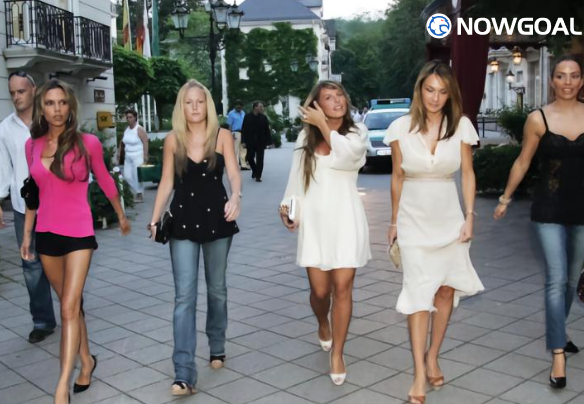
The England WAGs Take Germany by Storm
Part of the enormous attention surrounding the team stemmed from Britain's highly developed media industry, which followed every detail of England's World Cup campaign. The players’ wives and girlfriends were often celebrities in their own right. For example, David Beckham’s wife Victoria Beckham and Ashley Cole’s wife Cheryl were both famous singers long before marrying football stars.
During the 2006 World Cup, every England player except 19-year-old Aaron Lennon traveled with a wife or girlfriend. The British newspaper The Mail on Sunday popularized the term “WAGs,” an abbreviation of “wives and girlfriends.”
For many of the England WAGs, watching football was not their primary focus. They spent their time in Germany drinking, taking photographs, sightseeing, shopping, and showcasing their outfits and makeup in front of the media to further increase their fame and exposure. Wayne Rooney’s girlfriend, Coleen McLoughlin, was only 20 years old at the time. The day before England’s final group-stage match, she reportedly spent £57,000 in a single hour while shopping. When questioned by reporters, she casually remarked, “I just went for a walk and came back with a few little things.”
German newspaper Bild mocked the extravagance, writing: “They spend more money in ten minutes than most of us spend on clothes in half a lifetime.”
Defender Rio Ferdinand later recalled: “We were a bit like a circus. Football almost became secondary. People were more interested in what they were wearing and where they were going than in the England football team.”
Yet ultimately, matches are won and lost on the pitch. Whatever the WAGs did, they should not be held responsible for England’s failure, at least not primarily. To blame the team’s shortcomings solely on the WAGs for damaging the squad’s image or distracting the players would be simplistic and fundamentally wrong. England’s disappointment stemmed from a combination of factors, including squad balance, tactical issues, and team culture.
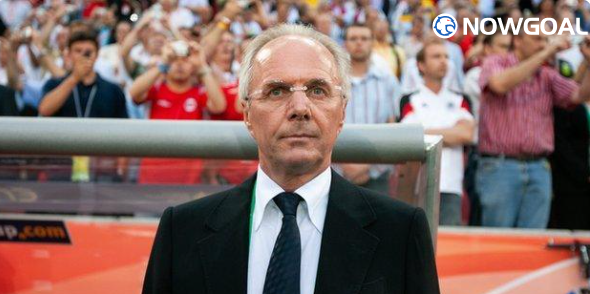
Too Many Stars, Too Few Solutions
Football is not won simply by assembling famous players.
Apart from goalkeeper Paul Robinson, every member of England’s preferred starting lineup was a global star. Head coach Sven-Göran Eriksson knew that dropping almost any of them would trigger enormous media controversy. As a result, he usually tried to fit all the big names into the starting XI.
His ideal lineup looked like this:
Goalkeeper: Paul Robinson
Left-back: Ashley Cole
Centre-backs: John Terry and Rio Ferdinand
Right-back: Gary Neville
Left midfield: Joe Cole
Central midfield: Steven Gerrard and Frank Lampard
Right midfield: David Beckham
Strikers: Wayne Rooney and Michael Owen
Unfortunately, Rooney suffered a fractured metatarsal shortly before the tournament. Although he made the squad, he was not fully fit and could only be used as a substitute during the group stage.
England defeated Paraguay 1–0 in their opening match thanks to a Beckham free-kick that resulted in an own goal. Rooney did not play. England then beat Trinidad and Tobago 2–0, with Rooney appearing as a second-half substitute.
By the third group match against Sweden, Rooney was finally ready to start alongside Michael Owen in what many hoped would be a dream partnership. Disaster struck after just four minutes when Owen ruptured his anterior cruciate ligament and was ruled out of the tournament. The partnership had barely begun before it was broken apart.
England drew 2–2 with Sweden but still advanced as group winners.
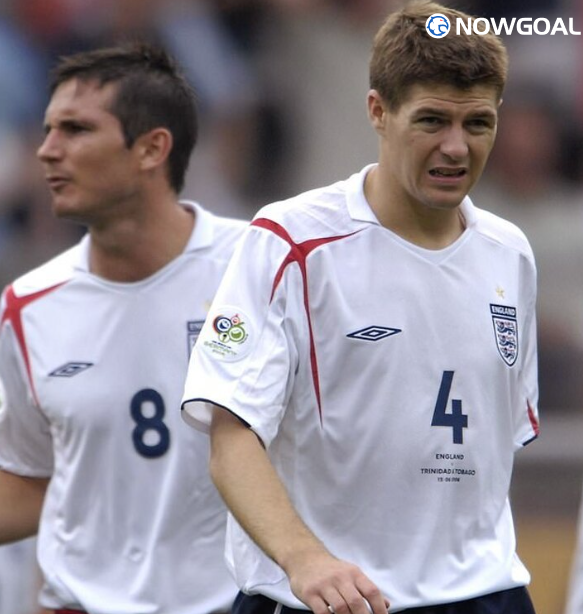
The Gerrard-Lampard Dilemma
Another major headache for Eriksson was the famous “Gerrard-Lampard problem.”
England possessed two world-class central midfielders: Steven Gerrard of Liverpool and Frank Lampard of Chelsea. Both were the heartbeat of their clubs, capable of scoring from distance, taking set pieces, dictating play, and controlling matches from central midfield.
While they shared many strengths, their styles were not identical. Gerrard was more complete, contributing equally in attack and defense, possessing greater physicality, and capable of drifting wide. Lampard excelled in off-the-ball movement, timing late runs into the box, and scoring goals. He was remarkably consistent, rarely injured, and earned a reputation as an “iron man.”
The problem was that both players were accustomed to being the central figure in their respective teams. To maximize their abilities, they needed significant control over possession and the rhythm of play. When fielded together for England, one inevitably had to sacrifice part of his natural game. Neither appeared willing—or perhaps able—to make that adjustment.
Eriksson never found a clear solution. He failed to establish defined roles for the pair, and their partnership lacked chemistry. Rather than producing a stronger midfield, it often resulted in a situation where one plus one equaled less than two.
England progressed through the group stage, but their attacking football was uninspiring and far below expectations. They scraped past Ecuador 1–0 in the Round of 16 thanks to another Beckham free-kick. In open play, they struggled badly.
Rooney’s Red Card and Ronaldo’s Wink
In the quarter-finals, England faced Portugal.
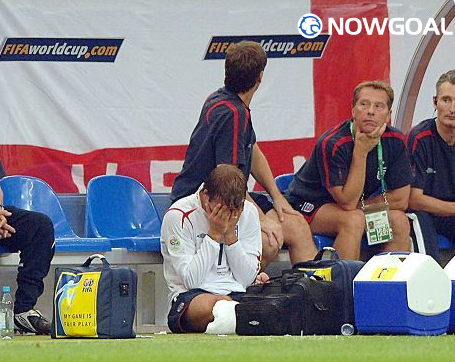
During the second half, captain David Beckham was forced off with an injury. As he sat on the bench, he buried his face in his hands and wept. Whether it was frustration, pain, or a sense of foreboding, nobody knew. But for England supporters, it felt like a bad omen.
Soon afterward, disaster struck.
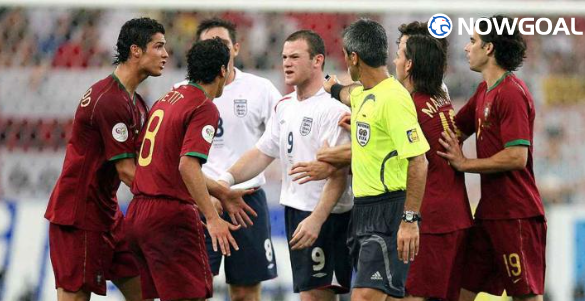
In the 62nd minute, Rooney became involved in a tussle with Portuguese defender Ricardo Carvalho while shielding the ball. Carvalho fell to the ground, and Rooney, unaware of his exact position behind him, accidentally stepped on him in the groin area.
Cristiano Ronaldo immediately ran toward referee Horacio Elizondo and passionately protested the incident.
Rooney, already frustrated, shoved Ronaldo away and told him to stay out of it.
At the time, Ronaldo was only 21 years old and playing in his first World Cup. He was also Rooney’s teammate at Manchester United. Despite their friendship, Ronaldo was fiercely competitive and determined to do everything possible to help Portugal.
However, Elizondo later insisted that Ronaldo’s protests had no influence on his decision.
“It was violent conduct, which is why Rooney was sent off. People can say whatever they like about Cristiano Ronaldo, but he had absolutely no influence on my decision. For me, it was clearly a red card.”
Rooney felt the dismissal was harsh.
“If you ask any player, or almost any fan, they’ll tell you I play the game honestly and straightforwardly. My only intention was to keep possession for England.”
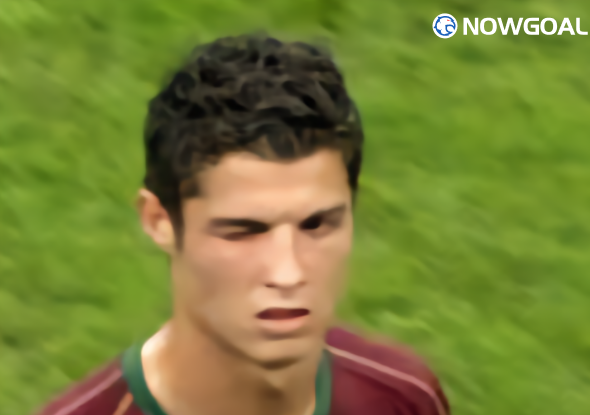
After Rooney was sent off, television cameras caught Ronaldo giving a quick wink toward the Portuguese bench, seemingly signaling that he had succeeded in gaining an advantage. The image enraged many England players.
Frank Lampard said: “He was Rooney’s teammate at Manchester United and still did that. It wasn’t right.”
Steven Gerrard added: “If he were my teammate, I’d be very disappointed.”
Yet Rooney himself held no grudge. After the match, the two exchanged text messages.
Ronaldo later recalled: “Rooney wished me luck for the rest of the tournament. He told me we had a great team and could go far. He wasn’t angry at all. He also said, ‘Don’t pay attention to the British media. They just want to create chaos.’”
Rooney understood that they would soon be teammates again at Manchester United.
“I knew what the media would say—that we'd fallen out. But for Manchester United’s sake, we had to make sure that wasn't true.”
Ronaldo also rejected claims that he had demanded a red card.
“I’m not the referee. I have no power to send players off. I simply told the referee it was a foul. Nothing more.”
Another Penalty Shootout Heartbreak
Even with ten men, England defended heroically. Given the talent they still possessed, Portugal could not break them down during normal time.
The match went to penalties.
England’s long-standing weakness under pressure resurfaced once again. Of their first four penalties, three were missed.
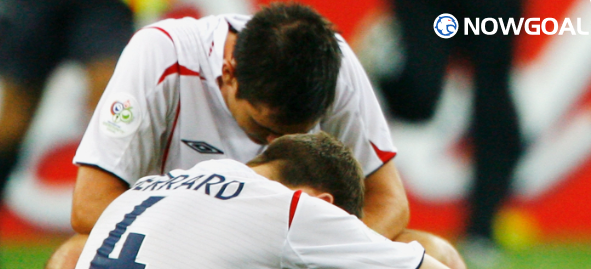
Lampard and Gerrard—normally reliable penalty takers for their clubs—both failed. As they walked toward the penalty spot, their faces revealed anxiety, uncertainty, and fear. Their efforts lacked conviction and were saved by Portuguese goalkeeper Ricardo.
Defender Jamie Carragher provided perhaps the clearest example of England’s nervousness. So overwhelmed was he that he took his penalty before the referee had blown the whistle. Although he scored, the kick had to be retaken. Under even greater pressure, he hit a weak effort that Ricardo saved comfortably.
Portugal’s decisive fifth penalty fell to Cristiano Ronaldo.
The young winger approached the ball with supreme confidence. Using a clever change of pace during his run-up, he wrong-footed goalkeeper Robinson and blasted the ball into the top corner.
As Ronaldo celebrated wildly, England’s Golden Generation was left in tears.
Years later, Eriksson still believed the team had missed a huge opportunity.
“I don’t think we were ready to win the World Cup in 2002 or the European Championship in 2004. But in 2006, we were ready. We should have done it. After Rooney was sent off, we played an hour with ten men.”
He also urged the media not to destroy Rooney.
“Don’t kill this kid. You need him. You can kill me instead because you don’t need me anymore.”
A Team Divided
Beyond tactical problems and bad luck in penalty shootouts, another critical factor contributed to the downfall of England’s Golden Generation: they were not truly united.
Inside the dressing room, players formed cliques based largely on club affiliations.
The Manchester United group included Rooney, Paul Scholes, Ferdinand, and Gary Neville.
The Liverpool group consisted of Gerrard, Carragher, and Peter Crouch.
The Chelsea group featured Lampard, Terry, and Joe Cole.
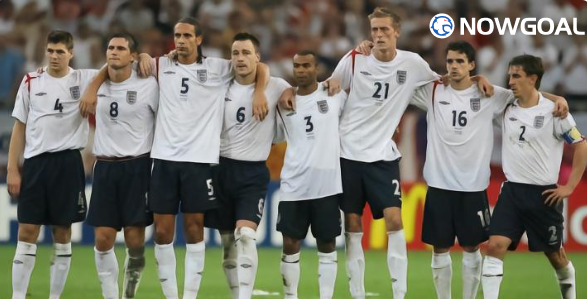
Players largely socialized with teammates from their own clubs. Beyond that, many were little more than teammates on paper.
Manchester United and Liverpool had long been bitter rivals, making relationships particularly complicated. Ferdinand later admitted:
“Gerrard didn’t like me, and I didn’t like him. There was hostility between our clubs.”
In reality, much of that hostility stemmed from competition on the pitch. Years after retirement, many of those former rivals became close friends and television colleagues.
Gerrard later reflected on the issue:
“I watch TV and see Carragher and Scholes debating together like they’ve been friends for twenty years. I see Carragher and Gary Neville, and they look like lifelong friends too. I think I’m the same now. My relationship with Ferdinand is probably closer today than it was during the fifteen years we played together.
Why didn’t we build those relationships when we were 20, 21, 22, or 23? Was it ego? Was it competition?
Why are we more mature and connected now?
Why couldn’t we connect as England teammates back then?
I think it was part of England’s culture. We lacked genuine connections. We all thought too highly of ourselves. We weren’t really a team.
I think we were a bunch of arrogant losers.”
The England WAGs Take Germany by Storm
Part of the enormous attention surrounding the team stemmed from Britain's highly developed media industry, which followed every detail of England's World Cup campaign. The players’ wives and girlfriends were often celebrities in their own right. For example, David Beckham’s wife Victoria Beckham and Ashley Cole’s wife Cheryl were both famous singers long before marrying football stars.
During the 2006 World Cup, every England player except 19-year-old Aaron Lennon traveled with a wife or girlfriend. The British newspaper The Mail on Sunday popularized the term “WAGs,” an abbreviation of “wives and girlfriends.”
For many of the England WAGs, watching football was not their primary focus. They spent their time in Germany drinking, taking photographs, sightseeing, shopping, and showcasing their outfits and makeup in front of the media to further increase their fame and exposure. Wayne Rooney’s girlfriend, Coleen McLoughlin, was only 20 years old at the time. The day before England’s final group-stage match, she reportedly spent £57,000 in a single hour while shopping. When questioned by reporters, she casually remarked, “I just went for a walk and came back with a few little things.”
German newspaper Bild mocked the extravagance, writing: “They spend more money in ten minutes than most of us spend on clothes in half a lifetime.”
Defender Rio Ferdinand later recalled: “We were a bit like a circus. Football almost became secondary. People were more interested in what they were wearing and where they were going than in the England football team.”
Yet ultimately, matches are won and lost on the pitch. Whatever the WAGs did, they should not be held responsible for England’s failure, at least not primarily. To blame the team’s shortcomings solely on the WAGs for damaging the squad’s image or distracting the players would be simplistic and fundamentally wrong. England’s disappointment stemmed from a combination of factors, including squad balance, tactical issues, and team culture.
Too Many Stars, Too Few Solutions
Football is not won simply by assembling famous players.
Apart from goalkeeper Paul Robinson, every member of England’s preferred starting lineup was a global star. Head coach Sven-Göran Eriksson knew that dropping almost any of them would trigger enormous media controversy. As a result, he usually tried to fit all the big names into the starting XI.
His ideal lineup looked like this:
Goalkeeper: Paul Robinson
Left-back: Ashley Cole
Centre-backs: John Terry and Rio Ferdinand
Right-back: Gary Neville
Left midfield: Joe Cole
Central midfield: Steven Gerrard and Frank Lampard
Right midfield: David Beckham
Strikers: Wayne Rooney and Michael Owen
Unfortunately, Rooney suffered a fractured metatarsal shortly before the tournament. Although he made the squad, he was not fully fit and could only be used as a substitute during the group stage.
England defeated Paraguay 1–0 in their opening match thanks to a Beckham free-kick that resulted in an own goal. Rooney did not play. England then beat Trinidad and Tobago 2–0, with Rooney appearing as a second-half substitute.
By the third group match against Sweden, Rooney was finally ready to start alongside Michael Owen in what many hoped would be a dream partnership. Disaster struck after just four minutes when Owen ruptured his anterior cruciate ligament and was ruled out of the tournament. The partnership had barely begun before it was broken apart.
England drew 2–2 with Sweden but still advanced as group winners.
The Gerrard-Lampard Dilemma
Another major headache for Eriksson was the famous “Gerrard-Lampard problem.”
England possessed two world-class central midfielders: Steven Gerrard of Liverpool and Frank Lampard of Chelsea. Both were the heartbeat of their clubs, capable of scoring from distance, taking set pieces, dictating play, and controlling matches from central midfield.
While they shared many strengths, their styles were not identical. Gerrard was more complete, contributing equally in attack and defense, possessing greater physicality, and capable of drifting wide. Lampard excelled in off-the-ball movement, timing late runs into the box, and scoring goals. He was remarkably consistent, rarely injured, and earned a reputation as an “iron man.”
The problem was that both players were accustomed to being the central figure in their respective teams. To maximize their abilities, they needed significant control over possession and the rhythm of play. When fielded together for England, one inevitably had to sacrifice part of his natural game. Neither appeared willing—or perhaps able—to make that adjustment.
Eriksson never found a clear solution. He failed to establish defined roles for the pair, and their partnership lacked chemistry. Rather than producing a stronger midfield, it often resulted in a situation where one plus one equaled less than two.
England progressed through the group stage, but their attacking football was uninspiring and far below expectations. They scraped past Ecuador 1–0 in the Round of 16 thanks to another Beckham free-kick. In open play, they struggled badly.
Rooney’s Red Card and Ronaldo’s Wink
In the quarter-finals, England faced Portugal.
During the second half, captain David Beckham was forced off with an injury. As he sat on the bench, he buried his face in his hands and wept. Whether it was frustration, pain, or a sense of foreboding, nobody knew. But for England supporters, it felt like a bad omen.
Soon afterward, disaster struck.
In the 62nd minute, Rooney became involved in a tussle with Portuguese defender Ricardo Carvalho while shielding the ball. Carvalho fell to the ground, and Rooney, unaware of his exact position behind him, accidentally stepped on him in the groin area.
Cristiano Ronaldo immediately ran toward referee Horacio Elizondo and passionately protested the incident.
Rooney, already frustrated, shoved Ronaldo away and told him to stay out of it.
At the time, Ronaldo was only 21 years old and playing in his first World Cup. He was also Rooney’s teammate at Manchester United. Despite their friendship, Ronaldo was fiercely competitive and determined to do everything possible to help Portugal.
However, Elizondo later insisted that Ronaldo’s protests had no influence on his decision.
“It was violent conduct, which is why Rooney was sent off. People can say whatever they like about Cristiano Ronaldo, but he had absolutely no influence on my decision. For me, it was clearly a red card.”
Rooney felt the dismissal was harsh.
“If you ask any player, or almost any fan, they’ll tell you I play the game honestly and straightforwardly. My only intention was to keep possession for England.”
After Rooney was sent off, television cameras caught Ronaldo giving a quick wink toward the Portuguese bench, seemingly signaling that he had succeeded in gaining an advantage. The image enraged many England players.
Frank Lampard said: “He was Rooney’s teammate at Manchester United and still did that. It wasn’t right.”
Steven Gerrard added: “If he were my teammate, I’d be very disappointed.”
Yet Rooney himself held no grudge. After the match, the two exchanged text messages.
Ronaldo later recalled: “Rooney wished me luck for the rest of the tournament. He told me we had a great team and could go far. He wasn’t angry at all. He also said, ‘Don’t pay attention to the British media. They just want to create chaos.’”
Rooney understood that they would soon be teammates again at Manchester United.
“I knew what the media would say—that we'd fallen out. But for Manchester United’s sake, we had to make sure that wasn't true.”
Ronaldo also rejected claims that he had demanded a red card.
“I’m not the referee. I have no power to send players off. I simply told the referee it was a foul. Nothing more.”
Another Penalty Shootout Heartbreak
Even with ten men, England defended heroically. Given the talent they still possessed, Portugal could not break them down during normal time.
The match went to penalties.
England’s long-standing weakness under pressure resurfaced once again. Of their first four penalties, three were missed.
Lampard and Gerrard—normally reliable penalty takers for their clubs—both failed. As they walked toward the penalty spot, their faces revealed anxiety, uncertainty, and fear. Their efforts lacked conviction and were saved by Portuguese goalkeeper Ricardo.
Defender Jamie Carragher provided perhaps the clearest example of England’s nervousness. So overwhelmed was he that he took his penalty before the referee had blown the whistle. Although he scored, the kick had to be retaken. Under even greater pressure, he hit a weak effort that Ricardo saved comfortably.
Portugal’s decisive fifth penalty fell to Cristiano Ronaldo.
The young winger approached the ball with supreme confidence. Using a clever change of pace during his run-up, he wrong-footed goalkeeper Robinson and blasted the ball into the top corner.
As Ronaldo celebrated wildly, England’s Golden Generation was left in tears.
Years later, Eriksson still believed the team had missed a huge opportunity.
“I don’t think we were ready to win the World Cup in 2002 or the European Championship in 2004. But in 2006, we were ready. We should have done it. After Rooney was sent off, we played an hour with ten men.”
He also urged the media not to destroy Rooney.
“Don’t kill this kid. You need him. You can kill me instead because you don’t need me anymore.”
A Team Divided
Beyond tactical problems and bad luck in penalty shootouts, another critical factor contributed to the downfall of England’s Golden Generation: they were not truly united.
Inside the dressing room, players formed cliques based largely on club affiliations.
The Manchester United group included Rooney, Paul Scholes, Ferdinand, and Gary Neville.
The Liverpool group consisted of Gerrard, Carragher, and Peter Crouch.
The Chelsea group featured Lampard, Terry, and Joe Cole.
Players largely socialized with teammates from their own clubs. Beyond that, many were little more than teammates on paper.
Manchester United and Liverpool had long been bitter rivals, making relationships particularly complicated. Ferdinand later admitted:
“Gerrard didn’t like me, and I didn’t like him. There was hostility between our clubs.”
In reality, much of that hostility stemmed from competition on the pitch. Years after retirement, many of those former rivals became close friends and television colleagues.
Gerrard later reflected on the issue:
“I watch TV and see Carragher and Scholes debating together like they’ve been friends for twenty years. I see Carragher and Gary Neville, and they look like lifelong friends too. I think I’m the same now. My relationship with Ferdinand is probably closer today than it was during the fifteen years we played together.
Why didn’t we build those relationships when we were 20, 21, 22, or 23? Was it ego? Was it competition?
Why are we more mature and connected now?
Why couldn’t we connect as England teammates back then?
I think it was part of England’s culture. We lacked genuine connections. We all thought too highly of ourselves. We weren’t really a team.
I think we were a bunch of arrogant losers.”
From:News
The Most Popular
-
 GROUP B PREVIEW: THAILAND TRAVEL TO FACE LAOS IN ASEAN HYUNDAI CUP™ 2026
 -
 MYANMAR VS MALAYSIA PREVIEW: HARIMAU MALAYA AIM TO START ASEAN CHAMPIONSHIP CAMPAIGN WITH VICTORY
 -
 VIETNAM VS TIMOR-LESTE PREVIEW: ASEAN HYUNDAI CUP™ 2026 GROUP A OPENER
 -
 Persib vs Arema: New Era Meets Proven Strength in President's Cup Showdown
 -
 Singapore vs East Timor Preview: Lions Look to Secure Victory Against Underdogs in ASEAN Championship Clash
 -
 Indonesia Eye Winning AFF Cup Start Against Cambodia
 Telegram
 Facebook
 X
X