
 Vietnam
 Thailand


The Athletic Calls for End of Premier League Half-Time Interviews Over Lack of Insight
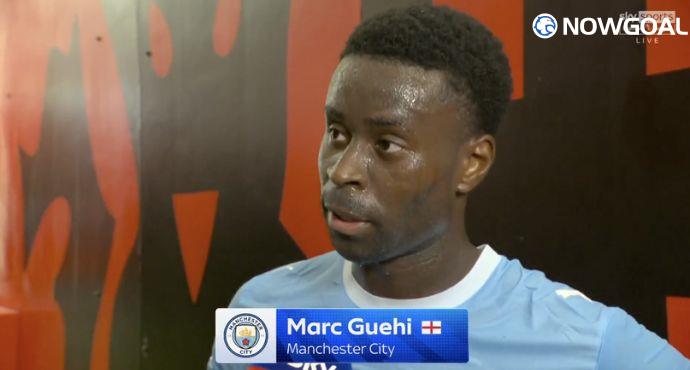
According to The Athletic (TA), most Premier League half-time interviews have become filled with clichés, with players and coaches rarely able to provide meaningful insights. The report argues that the current arrangement should be scrapped.4During Sunday’s Manchester derby, Guehi was stopped by a Sky Sports reporter at half-time and asked several questions. When asked about Manchester City teammate Phil Foden’s red card incident, Guehi said he had not seen what happened and added: “My job is to focus on what I have to do next.”
This is not a criticism of Guehi or other players placed in similar situations. After completing a Premier League first half, players are still physically exhausted, their heart rates are elevated, and they still have another 45 minutes to play. It is difficult for them to provide thoughtful answers under such circumstances.
The Premier League introduced half-time interviews with players and managers from the 2025-26 season, but these interviews usually consist of only a few rushed and brief questions, with equally short responses. Since the media already conducts interviews with players and coaches before and after matches, it is debatable whether interrupting them again during the game is necessary.
The initiative was approved by all 20 Premier League clubs before the start of last season. The Premier League’s 2026-27 handbook describes it as “enhanced matchday access.” The arrangements also include dressing-room filming and in-game interviews with a player who has already been substituted or with a coach.
Each club must participate in at least two of these activities per season, while broadcasters must submit requests in advance.
Interviews can take place on the touchline, in the players’ tunnel, or in designated interview areas, but they cannot delay the restart of the match. If circumstances become unsuitable, clubs are allowed to withdraw their previous approval. The rules state that such interviews can contain a maximum of three questions, which must be related to league matches and remain positive in tone.
Sky Sports used one of its two permitted interview opportunities for the season during yesterday’s Manchester derby, also speaking with Manchester United manager Michael Carrick at half-time. Carrick answered questions while walking along the touchline toward the substitutes’ bench — a situation that hardly creates the conditions for meaningful discussion.
However, opportunities to interview Premier League players and coaches are generally limited, meaning every available chance is eagerly pursued by the media. Journalists often believe that even seemingly dull interviews can occasionally produce interesting, controversial, or unexpected answers.
The problem is that when the number of questions, the topics, and even the tone of the interview are predetermined, interviewers have little room to make an impact. Players should be focusing on the match or recovering physically to complete the remaining minutes, while the media and fans often gain little valuable information.
Similar practices have existed in cricket for many years. Players wear microphones or earpieces during matches, with commentators occasionally asking questions. However, under the pressure of competition, players can usually only provide brief responses. In the recent final of The Hundred cricket tournament, one player even made a defensive mistake after being asked which football club he supported.
That said, these interviews are not always meaningless. During the World Cup, England assistant coach Anthony Barry gave a remarkably honest half-time interview. He discussed the team’s “fearful patterns” during matches, analyzed the reasons behind their poor performance, and explained that Harry Kane’s early missed penalty — followed by a successful retake — had failed to calm the team’s “nervousness.”
In the third-place playoff against France, Barry also spoke about England playing “with broken hearts” just three days after their semi-final defeat to Argentina.
However, such moments are extremely rare. Most of the time, Premier League half-time interviews have become little more than a contractual obligation, with players and coaches offering predictable answers. The Athletic argues that players, media outlets, and supporters are all gaining very little from the current system — and that now may be the right time to end these interviews.
The Most Popular
-
 Persijap vs Persib: Can the Hosts Stop a Confident Maung Bandung?
 -
 Persija Eye Third Straight Win Against Java United
 -
 Man City vs Sunderland: Can the Black Cats Stop City’s Perfect Run?
 -
 Tottenham vs Aston Villa Prediction: Team News, Lineups & Match Preview
 -
 Madrid Derby Showdown: Atletico vs Real Madrid
 -
 Barcelona Eye Victory in Sevilla Showdown
 Telegram
 Facebook
 X
X